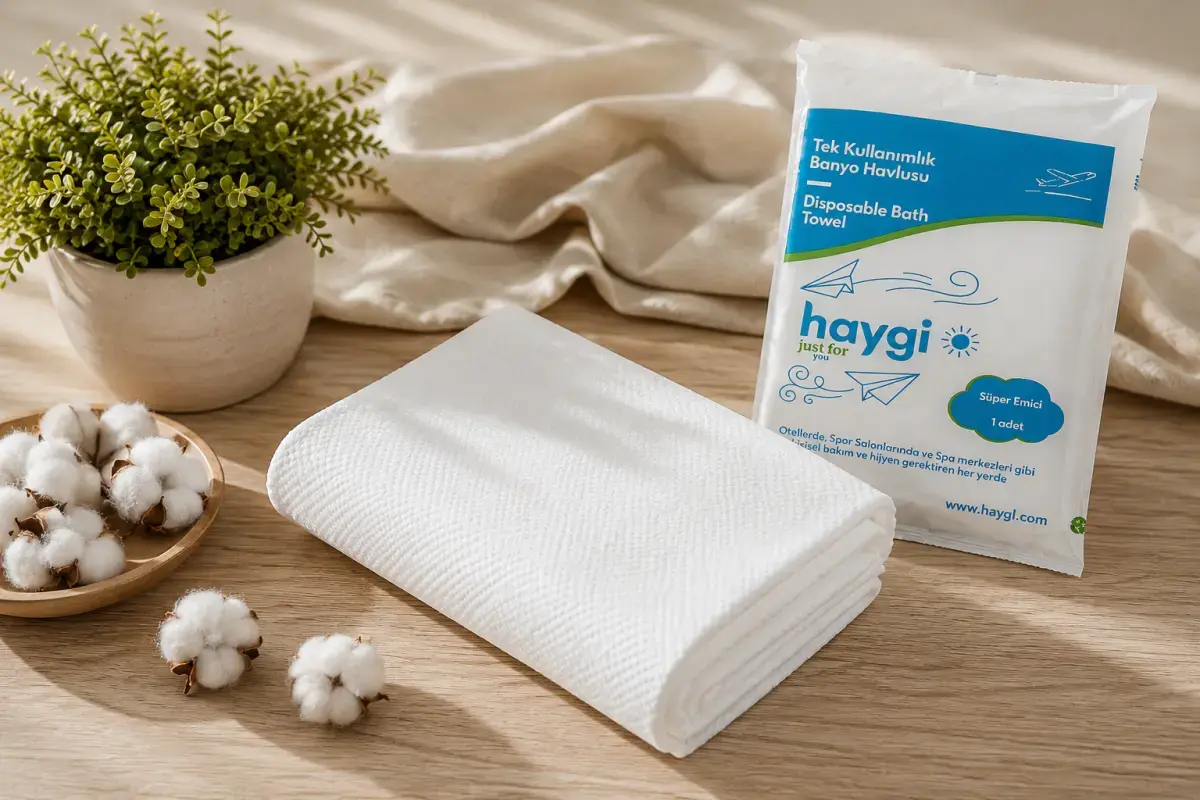
Is Disposable Hotel Towel Really Harmful to the Environment? The Real Picture
When we hear the word "disposable," we usually think of plastic bags, plastic bottles, or packaging that's used once and thrown away. That's why hotel managers sometimes perceive disposable towels and shorts as an environmentally harmful choice.
But the real picture is quite different once you look closer. In this article, we'll look at what the product actually is, and how it compares to the full lifecycle of a traditional cotton towel — washing, drying, chemical use, and equipment lifespan.
"Disposable" and "plastic" are not the same thing
Most disposable products on the market get lumped into the same category as plastic-based items — a mistaken generalization. But disposable towels and shorts are actually made using nonwoven technology, typically from cotton, viscose (derived from wood cellulose), or a blend of the two.
In this production method (spunlace / hydroentanglement), fibers are bonded together using high-pressure water jets, without any chemical binders. In other words, the product's core material isn't synthetic plastic — it's natural or biodegradable cellulosic fiber.
So what's the real cost of a traditional cotton towel?
Here's where it gets interesting. A classic cotton towel in a hotel room isn't "single-use," but it comes with a cycle that repeats over and over:
- Every wash means water consumption. Hotel laundries are among the highest water-consuming operations at an industrial scale.
- Every wash means detergent and chemical waste. Stain removers, softeners, and bleaches add extra load to both water sources and wastewater treatment systems.
- Every wash means energy consumption. High-temperature washing and drying increase electricity/gas use.
- Fabric lifespan is limited. The repeated wash-dry cycle wears down the fiber structure, and after a certain number of uses, towels are retired — creating separate textile waste.
In other words, being "reusable" doesn't mean an environmental cost of zero — quite the opposite: it means a continuously repeating water-energy-chemical cycle.
Disposable products remove this cycle entirely
For a hotel using disposable towels and shorts, the difference is clear:
- No washing process → no water consumption, no detergent/chemical waste
- No drying process → no additional energy consumption
- No laundry equipment wear or maintenance cost
- The fabric is made of cellulosic fibers that can break down at end of life without leaving chemical residue
One important point needs to be underlined here: whether a product is "biodegradable" depends on the manufacturer's specific fiber blend and fabric weight. At Haygi, we make it a point to clearly share which fiber blend is used for each product and what its breakdown process looks like — we prefer concrete technical information over a generic "eco-friendly" label.
Recycling and end-of-life stage
Cellulose-based nonwoven products can break down in the environment considerably faster than plastic-based alternatives (like polypropylene). These products:
- Can be included in general waste streams after use,
- Can show noticeably faster natural breakdown compared to plastics due to their cellulose structure,
- Can be directed to organic waste/compost streams at some facilities (depending on local waste management infrastructure).
Our recommendation to hotels: request the product's technical data sheet from the supplier (fiber composition, weight, breakdown timeline). A transparent supplier won't hesitate to share this information.
What does this mean in practice for boutique and 5-star hotels?
On the guest experience side, disposable products already offer a hygiene and convenience advantage. But the lesser-known side is this: they also benefit the hotel in terms of operational cost and environmental load.
- Lower laundry investment and maintenance cost
- Reduced water and energy bills
- No detergent/chemical purchasing or wastewater treatment burden
- Less staff workload (collecting, washing, folding, distributing)
That translates into a concrete contribution for the hotel, both in sustainability reporting and in cost line items.
Conclusion
Contrary to the "use it and toss it" perception, disposable towels and shorts — when made with the right fiber choice — can have a lighter environmental footprint than the continuously repeating water-energy-chemical cycle of a traditional cotton towel. What matters is being able to back this claim with concrete technical data and offering hotel management transparent information.
At Haygi, we share the technical data sheets of our disposable towel and shorts products for boutique and 5-star hotels upon request. Get in touch with us for more details about our products.